Language Revitalization

Add your own intro here (Customize using Settings -> General -> Tagline)

Vibe Coding Language Revitalization Tools

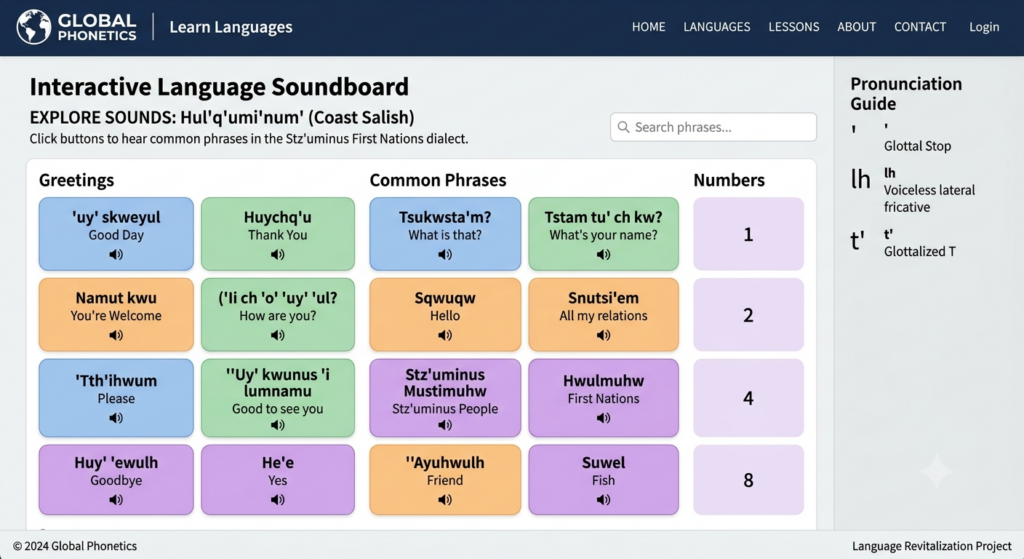
We can use generative A.I. tools to create language learning games by simply describing the game rather than doing computer programing. Today we created a language soundboard for example.

Pro’s to creating these soundboards is that I for one able to do it, and seeing I am old school pen and paper kind of gal myself, but having step by step instructions and the beauty of the programs used I was able to create a masterpiece in my opinion. The other plus is that it was quick enough to get it onto the screen and usable this would benefit my future students and the classroom that I dream of having in the near future. Then again being able to modify it to your own dialect of your choosing is another tool gained. So I am going to say if I can have fun doing this and creating this sound board for a future self then you can do it too, I urge you try it today.

Yet, beware the only draw back that I can see is that you need patience to explore and find what fits to your dialect and if its not there, and then that is the world throwing it out to you that you should go and create it. This is the only draw back, but I am going to take this on, as the challenge is accepted so stay tuned for another blog to see my work take shape, again this wonderful tool will keep you busy and you created it with the power of your own hands, and that is impressive enough to announce this to you all.
decorative

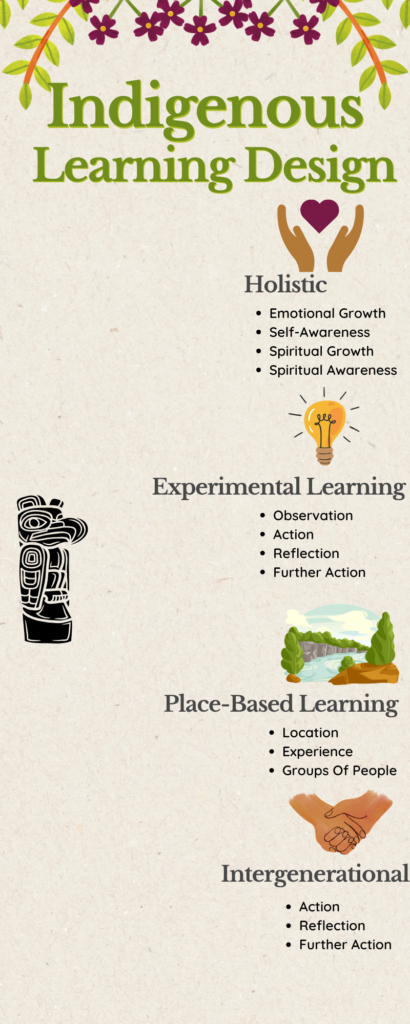
Indigenous Learning Design Poster

Canva has a beautiful way to bring to life culture, art, vision and imagination for those who want to create and bring to life beautiful posters to share. The work put into it will be mighty, but it will take you through it step by step so it’s worth exploring.

We All Learn In Different Ways And That’s The Key Thing.

When I had the opportunity to watch the movie,“Most Likely to Succeed” it feed me morsels of rich insights to where we, as the new ancestors, stand collectively in the educational society. It’s like our Sul’hween (Elder’s) the true knowledge keepers have passed down since time immemorial that it truly takes a village to raise a child, but to truly enrich the village it takes investing in our children, as they will be the future and care, for this village. When the video introduced the school of the future “High Tech High School” it brought me directly to a place in my own life where I craved these teachings of “living to learn” and “turn everything over to your in charge, if you can do this you can do anything.” This again, brings us to our sul’hweens sqwal (Elder’s words)” i will show you or tell you once how it to go or the way to begin and the rest is up to you and if you can do this teaching/education truly is meant for you,” and it kept resurfacing in the video within the walls of the school and the teachers who were there to learn from and along side of the students, just like our elders raised us and continue to do so to this day. If we raise our villages to truly honor not only our achievements, but the mistakes we are about to make within our newly advanced technology we are adding to our educational environment that starting the foundation of a technological society, and fully embrace that we all matter in this world that can become like “High Tech High School”, because we all learn in different ways and that’s the key thing.  Most Likely to Succeed Film (96 min)

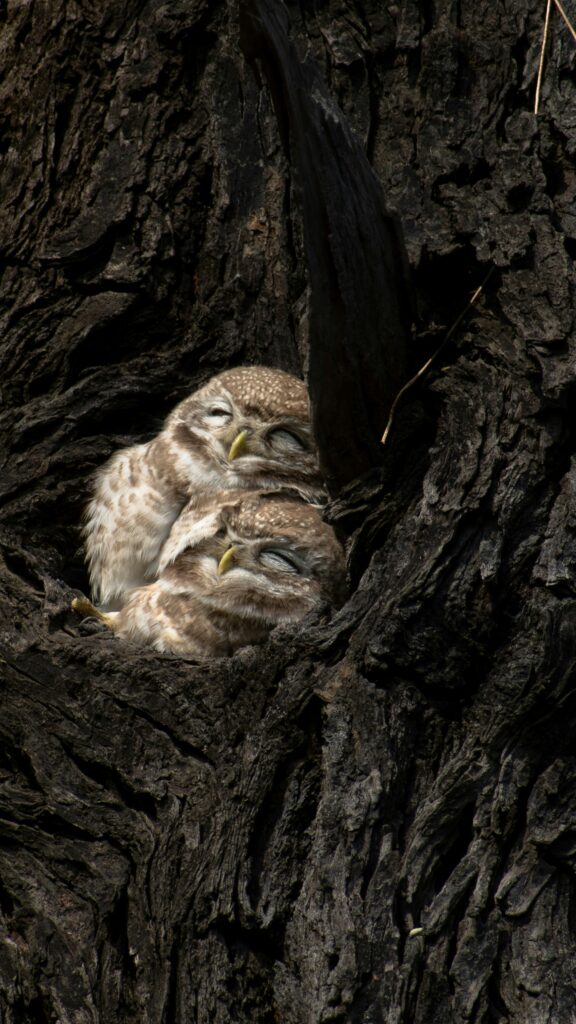
baby owls

Photo by Chirag Saini on Unsplash

I found this video very important and wanting to share with my fellow internet family. I picked baby owls because in the Cost Salish Stz’uminus Tribe, we find these birds to be sacred and they deliver messages to us in many important ways and breeds of owls send different types of messages. Overall it is best to treat birds, mother nature and the world like family, as is shared philosophy with the beautiful author Robin Wall-Kimmer. It is true we all benefit from living in harmony if we all respect each other and the way we survive in the world around us Huy ch q’a si’em nu si’ye’yu ‘i’ shwalukwa (Hul’q’umi’num’ for: Thank you my dearly respected friends and family)